Call Us Today!
(808) 359-2276


At the office of Kahana Family Dental Center, our approach to restoring teeth blends contemporary materials with careful clinical judgment. We prioritize predictable results, patient comfort, and a final restoration that both functions well and looks natural. Our team keeps current with developments in restorative dentistry so that each ceramic crown we place meets modern expectations for strength and aesthetics.
Teeth are remarkably resilient, but they are not invincible. Deep decay, cracks from injury, previous large restorations, or the cumulative effects of grinding can leave a tooth too compromised for a simple filling. When a tooth needs more support than a filling can provide, a full-coverage ceramic crown becomes the logical next step to protect and restore the tooth.
Advances in dental ceramics mean crowns no longer require a visible metal framework to perform well. Contemporary all-ceramic options deliver durability, excellent biocompatibility, and lifelike appearance. For many patients, these materials provide an ideal combination of strength and natural translucency that blends seamlessly with adjacent teeth.
We tailor every treatment plan to the individual, considering bite forces, cosmetic goals, and long-term function. Our goal is to recommend restorative solutions that preserve as much healthy tooth structure as possible while delivering a stable, attractive outcome your family can rely on for years to come.
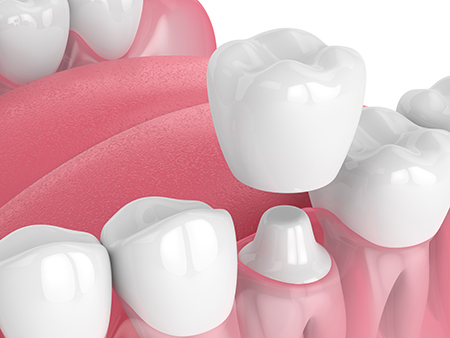
A ceramic crown offers full coverage for a tooth that has lost a significant portion of its natural structure. Unlike a filling, which replaces a portion of the tooth, a crown caps the remaining tooth to redistribute chewing forces and prevent further breakage. This full encapsulation is particularly important when a tooth has multiple cusps or when the remaining enamel is thin.
Root canal therapy also frequently leads to crown recommendations. After the nerve is treated, the tooth is more brittle and susceptible to fracture; a crown provides reinforcement and helps maintain chewing function without exposing the tooth to reinjury. Similarly, when a restoration must serve as a support for a bridge or an implant crown, full-coverage ceramic restorations are often the preferred solution.
Another common indication is when a tooth’s shape, color, or alignment detracts from the smile. Ceramic crowns can correct an undersized, oddly shaped, or stubbornly stained tooth while preserving the surrounding healthy teeth. In these cases the crown serves both restorative and cosmetic purposes, giving you a natural-looking, long-term solution.
When significant decay or traumatic damage has removed too much tooth structure for a filling
When a large or failing filling needs replacement with a stronger, more protective restoration
To cover and protect a tooth after root canal treatment
To restore a dental implant or serve as an abutment for a fixed dental bridge
To improve the appearance of a tooth that is discolored, misshapen, or out of proportion with neighboring teeth

All-ceramic crowns are engineered to mimic natural tooth structure in both form and optical properties. Materials such as lithium disilicate and advanced zirconia reproduce the way natural enamel transmits and reflects light, creating a lifelike translucency that metal-based restorations cannot match. This makes ceramic crowns an excellent choice for teeth that show when you smile.
Beyond aesthetics, ceramic crowns offer practical benefits: many require less aggressive tooth reduction, are lighter in weight, and avoid the potential for a visible dark margin at the gumline that can occur with metal-based restorations. Because they are metal-free, ceramics are well tolerated by soft tissues and are an appropriate option for patients with metal sensitivities.
Strength has improved dramatically with newer ceramic systems. While early porcelain crowns were delicate, contemporary formulations combine toughness with beauty. This means you can often rely on an all-ceramic crown for molar function as well as anterior aesthetics, provided the correct material is chosen for the tooth’s location and the patient’s bite.
Another advantage is the resistance to staining and discoloration; well-made ceramic crowns maintain their color and surface characteristics over time. With proper oral hygiene and routine maintenance, a ceramic crown can deliver many years of reliable service without compromising the appearance of your smile.
Not all ceramic crowns are identical; different materials provide different combinations of strength, translucency, and minimal thickness requirements. The choice of material depends on the tooth’s role — front teeth demand superior aesthetics while back teeth require higher resistance to chewing forces. We review these factors carefully to recommend the most appropriate option.
Popular choices include lithium disilicate, which offers an excellent balance of beauty and strength for many situations, and monolithic zirconia, which provides exceptional durability for molars and patients with heavy bite forces. There are also layered ceramic techniques that combine a strong core with a more translucent veneering porcelain for enhanced aesthetics in visible areas.
The selection process also considers how much natural tooth remains, whether the tooth will support a bridge or implant, and your specific cosmetic goals. We discuss each option’s pros and cons in clear terms so you can make an informed decision that blends function and appearance.
Lithium Disilicate — excellent aesthetics with strong everyday performance
Leucite-reinforced ceramics — traditionally favored for highly aesthetic anterior cases
Monolithic zirconia — superior strength for posterior teeth and heavy occlusal demands
High-translucency zirconia — a good compromise when both strength and natural appearance are priorities
Selecting the correct material is an important part of treatment planning; the right match ensures long-term success and a restoration that looks and feels natural in your mouth.

The crown workflow typically begins with a careful evaluation and diagnostic records, which may include digital imaging and shade selection. Tooth preparation removes any decay and shapes the remaining tooth to support the crown while preserving as much healthy structure as possible. If a root canal or core build-up is necessary, those steps are completed before a crown is placed.
Many practices now use digital scanning and CAD/CAM fabrication to design and mill crowns with high precision. Whether your crown is crafted in a lab or milled in-office, provisional protection is provided while the permanent restoration is finalized. When the final crown arrives, we check fit, bite, and color, making minor adjustments as needed before permanently cementing or bonding the restoration.
After placement, you’ll receive guidance on care and wear. While ceramic crowns are highly durable, habits such as chewing hard objects or unmanaged clenching can stress any restoration. Routine dental visits help monitor the crown’s integration with your bite and surrounding gum tissue, allowing us to address minor issues before they become problems.
Our team emphasizes thoughtful planning and meticulous execution when restoring teeth with ceramic crowns. We combine clinical experience with up-to-date materials to deliver restorations that are both attractive and functional. Clear communication and a patient-centered approach help ensure treatment decisions align with your long-term oral health goals.
From material selection to final polishing, we set a high standard for detail and consistency so your new crown looks natural and performs reliably. We also coordinate with laboratory partners and use modern digital tools when appropriate to streamline care and improve predictability.
If you are considering a ceramic crown or want to explore restorative options to protect a damaged tooth, our team will explain the steps involved and recommend the solution that best balances durability and aesthetics for your smile. We aim to preserve healthy tooth structure wherever possible while restoring comfort and confidence when you chew and smile.
To learn more about ceramic crowns and whether they are the right choice for your dental needs, please contact us for more information.
While a dental filling is designed to replace a portion of a decayed or damaged tooth, a dental crown offers full coverage to restore the tooth’s entire outer surface. A well-fitting dental crown not only protects and strengthens the underlying tooth structure, but it also restores the tooth’s appearance and function.
The procedure for getting an all-ceramic crown is much like the procedure for getting any other type of crown. In all cases, the tooth needs to be prepared, an impression taken, and a permanent crown cemented into place. A single all-ceramic crown can typically be fabricated over the course of two visits. However, with CAD/CAM technology, a same-day crown can be fabricated from start to finish in a single visit. With the first approach, a temporary crown is typically worn until the second visit, when the permanent restoration is placed. As with every treatment plan, our office will explain your best options in care.
As the name implies, a temporary crown is only worn for a short time until the permanent crown is placed. A temporary crown is typically fabricated from durable tooth-colored dental acrylics. While designed to protect the underlying tooth between appointments, and until your new permanent crown gets placed, a temporary crown is also fabricated to look like a natural tooth and maintain the look of your smile.
While you should feel better having an attractive and functional tooth to restore your smile, your tooth may feel a little sensitive following treatment. This initial sensitivity will subside. We take great care to make sure your new restoration looks great, fits well, and your bite is perfect. However, we’re always happy to make any minor adjustments to ensure your comfort.
With some exceptions, teeth with root canal procedures are typically restored and protected from further damage with a full-coverage crown. Based on what’s best for your smile, our office will recommend the most appropriate restoration to maintain the health and longevity of your tooth following a root canal procedure.
A dental crown is a long-term restoration that, if properly cared for, can serve you well for many years to come. Once your new crown is placed, it requires the same brushing, flossing, and periodic checkups as your natural teeth. Avoid biting your fingernails and chewing on hard or sticky objects such as ice, pencils, or taffy, which can damage or loosen your crown. Remember, clenching and grinding your teeth puts excessive pressure on both natural teeth and dental restorations. Unless treated, this habit can compromise the longevity and integrity of your dental work, including crowns.
Although your new all-ceramic crown restores the tooth's strength, form, and function, you can still develop dental disease in the absence of proper care. To prevent gum disease and tooth decay, it’s essential to brush and floss as instructed and see our office for routine checkups, cleanings, and care.
How long a dental crown lasts depends on various factors, including your level of oral care, diet, and oral habits. While the standard answer is that dental crowns can last anywhere from 5 to 15 years, existing literature confirms that most dental crowns remain in place at 15 to 20 years.
At the office of Kahana Family Dental, we strive to provide the highest quality of care to address all your dental needs. Once we’ve had the opportunity to examine your smile, we can give you a clear picture of any dental issues that are present, along with a quote for how much treatment will be. The cost of dental crowns can vary a little, depending on the type of crown and its location. Our goals are to provide the highest quality of care and help patients begin treatment without additional financial stress or delay. We’re always happy to answer all your questions on dental insurance coverage, available financing, and payment plans.
Coverage for all-ceramic crowns depends on your dental insurance plan. Today, many dental plans provide some level of coverage for all-ceramic crowns. At the office of Kahana Family Dental, we work with patients to optimize their dental benefits and get the care they need to maintain healthy and beautiful smiles!
Ceramic crowns are full-coverage restorations fabricated from advanced glass-ceramic or zirconia materials that mimic the optical properties of natural enamel. Unlike traditional metal-based crowns, modern all-ceramic options provide lifelike translucency and a metal-free margin at the gumline, which improves esthetics in the smile zone. These restorations are biocompatible and well tolerated by soft tissues, making them a preferred option for patients with metal sensitivities.
Technically, ceramics reproduce the way natural tooth structure transmits and reflects light, so a well-made ceramic crown can blend seamlessly with adjacent teeth. Contemporary ceramic systems also offer improved strength compared with earlier porcelains, allowing clinicians to select materials appropriate for both front and back teeth. The choice between ceramic types depends on the tooth location, bite forces, and cosmetic goals rather than a single “best” material.
A ceramic crown is recommended when a tooth has lost too much structure for a filling to provide reliable protection, such as with extensive decay, large failed restorations, or fractures that compromise multiple cusps. Crowns cap the remaining tooth and redistribute chewing forces to prevent further breakage, which is particularly important for teeth subject to high occlusal stress. When the remaining enamel is thin or the tooth geometry cannot support a durable filling, full-coverage restoration becomes the logical and long-lasting choice.
Additionally, teeth that have undergone root canal therapy often require crown coverage because endodontically treated teeth are more brittle and prone to fracture over time. Crowns are also indicated when a restoration must serve as an abutment for a bridge or as the final restoration on an implant. In cosmetic situations where shape, size, or color cannot be corrected conservatively, a crown can restore both function and appearance while preserving neighboring teeth.
Common modern choices include lithium disilicate, various forms of zirconia, and leucite-reinforced ceramics, each offering a different balance of strength and translucency. Lithium disilicate is prized for its excellent esthetics and reliable everyday strength, while monolithic zirconia provides superior toughness for posterior teeth and heavy bite forces. High-translucency zirconia and layered techniques combine strength with improved optical properties for visible areas of the mouth.
Material selection is guided by the tooth's role, the amount of remaining tooth structure, and the patient’s occlusion and cosmetic priorities. For front teeth where light transmission and shade matching are critical, a more translucent ceramic may be chosen; for molars, strength and resistance to wear take precedence. A careful clinical evaluation and discussion of the pros and cons help determine the most appropriate material for long-term success.
The workflow begins with a thorough evaluation, diagnostic records, and shade selection, followed by careful tooth preparation that removes decay and shapes the tooth to support the crown while preserving healthy structure. Many practices now use digital scanning and CAD/CAM design to capture precise impressions and to fabricate restorations either in-office or in a specialized laboratory. A provisional crown protects the prepared tooth while the definitive ceramic restoration is completed and finalized to match fit and color.
At the placement appointment the dentist checks the crown for proper fit, occlusion, and esthetics, making minor adjustments before permanently cementing or bonding the restoration. Post-placement instructions focus on gentle use during the initial settling period and on maintaining excellent oral hygiene. Routine follow-up visits allow the team to monitor the crown’s integration with the bite and surrounding tissues and to address any necessary refinements.
Modern ceramic crowns are highly durable when the correct material is selected and proper clinical techniques are used; many provide years of reliable service for chewing and esthetic function. Durability depends on factors such as the chosen ceramic, the amount of remaining tooth structure, the patient’s bite forces, and ongoing oral habits. While ceramics are resistant to staining and surface wear, they can be affected by extreme forces such as biting hard objects or unchecked grinding.
Maintenance is straightforward and aligns with routine oral care: brush twice daily with a fluoride toothpaste, floss once a day, and attend regular dental checkups and cleanings. Patients who clench or grind may benefit from a custom nightguard to protect crowns and natural teeth from excessive wear. Prompt attention to any new sensitivity, looseness, or changes in the bite helps catch minor issues before they become more significant.
Yes. Ceramic crowns are commonly used to restore teeth after root canal therapy because they reinforce the remaining tooth structure and reduce the risk of fracture following endodontic treatment. When a post and core or build-up is required to replace missing tooth structure, the crown provides final protection and function. Careful planning ensures that the restoration supports chewing forces while preserving the tooth’s long-term integrity.
Ceramic crowns are also used routinely as the final restoration for implants and as abutment crowns that support fixed bridges. For implant crowns, the ceramic material is chosen to achieve an appropriate balance of strength and esthetics while ensuring a secure connection to the implant abutment. In bridgework, the prosthetic design and material selection focus on distributing forces evenly across the supporting teeth and maintaining tissue health.
When fabricated and matched correctly, a ceramic crown can reproduce the color, translucency, and surface texture of natural teeth closely enough to be virtually indistinguishable from adjacent teeth. Shade selection, translucency grading, and surface characterization are part of the laboratory or CAD/CAM process, and the dentist will use digital tools and shade guides to achieve a consistent result. Layered ceramic techniques or high-translucency options are available when enhanced esthetics are required in the smile zone.
Communication between the patient, dentist, and dental technician is important to set realistic expectations regarding shade, shape, and finish. Minimally invasive preparation and attention to occlusion also help the crown integrate smoothly with surrounding teeth. With routine polishing and proper hygiene, the crown's appearance remains stable and harmonious within the smile.
As with any dental restoration, ceramic crowns carry some risks, including temporary sensitivity after preparation, the need for minor occlusal adjustments, and the possibility of ceramic chipping or fracture under extreme stress. Gum irritation can occur if the crown margin is not properly contoured, which is why precise finishing and good oral hygiene are essential. Infrequently, a crown may require replacement due to recurrent decay at the margin or changes in the supporting tooth over time.
All-ceramic restorations avoid metal-related allergic reactions, but they still require appropriate material selection for the patient's bite and functional demands. Early detection of problems through regular examinations increases the likelihood that simple repairs or adjustments will be effective. Open communication about habits such as grinding, nail-biting, or chewing ice helps the care team provide strategies to protect the restoration.
The practice emphasizes careful treatment planning, accurate diagnostics, and precise tooth preparation to achieve predictable outcomes for ceramic crowns. Digital imaging and intraoral scanning, when used, improve impression accuracy and communication with trusted laboratory partners or in-office milling systems. Material selection is individualized to each case, taking into account tooth location, occlusal forces, and esthetic goals to match function with appearance.
Attention to detail continues through final polishing, occlusal adjustment, and post-placement follow-up so that the restoration integrates comfortably with the bite and surrounding tissues. The team coordinates laboratory communication and uses current restorative protocols to ensure consistent results that support long-term oral health. Clear patient education about care and maintenance further contributes to the restoration's longevity.
After crown placement it is common to experience mild sensitivity or tenderness around the treated tooth and adjacent gum tissue for a few days, which typically responds to over-the-counter pain relievers and careful eating. Patients are advised to avoid very hard or sticky foods during the initial settling period and to report any persistent discomfort or an unusual bite sensation so adjustments can be made. Routine oral hygiene should be continued, taking care to clean around the crown margin where plaque can accumulate.
Follow-up appointments allow the dental team to verify fit, occlusion, and tissue health and to perform any minor refinements required for comfort and function. Regular checkups and professional cleanings help monitor the restoration and surrounding teeth for early signs of wear or recurrent issues. If any concerns arise between visits, prompt contact with the office facilitates timely evaluation and care.